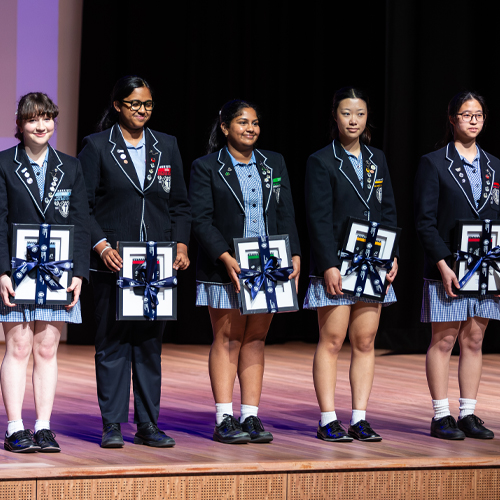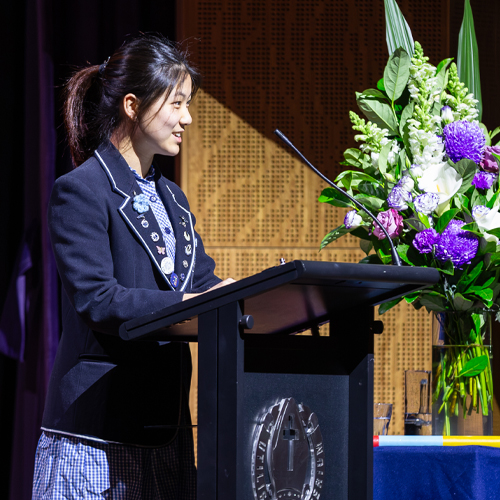
Today, Mrs Dunwoody farewells the Class of 2026.

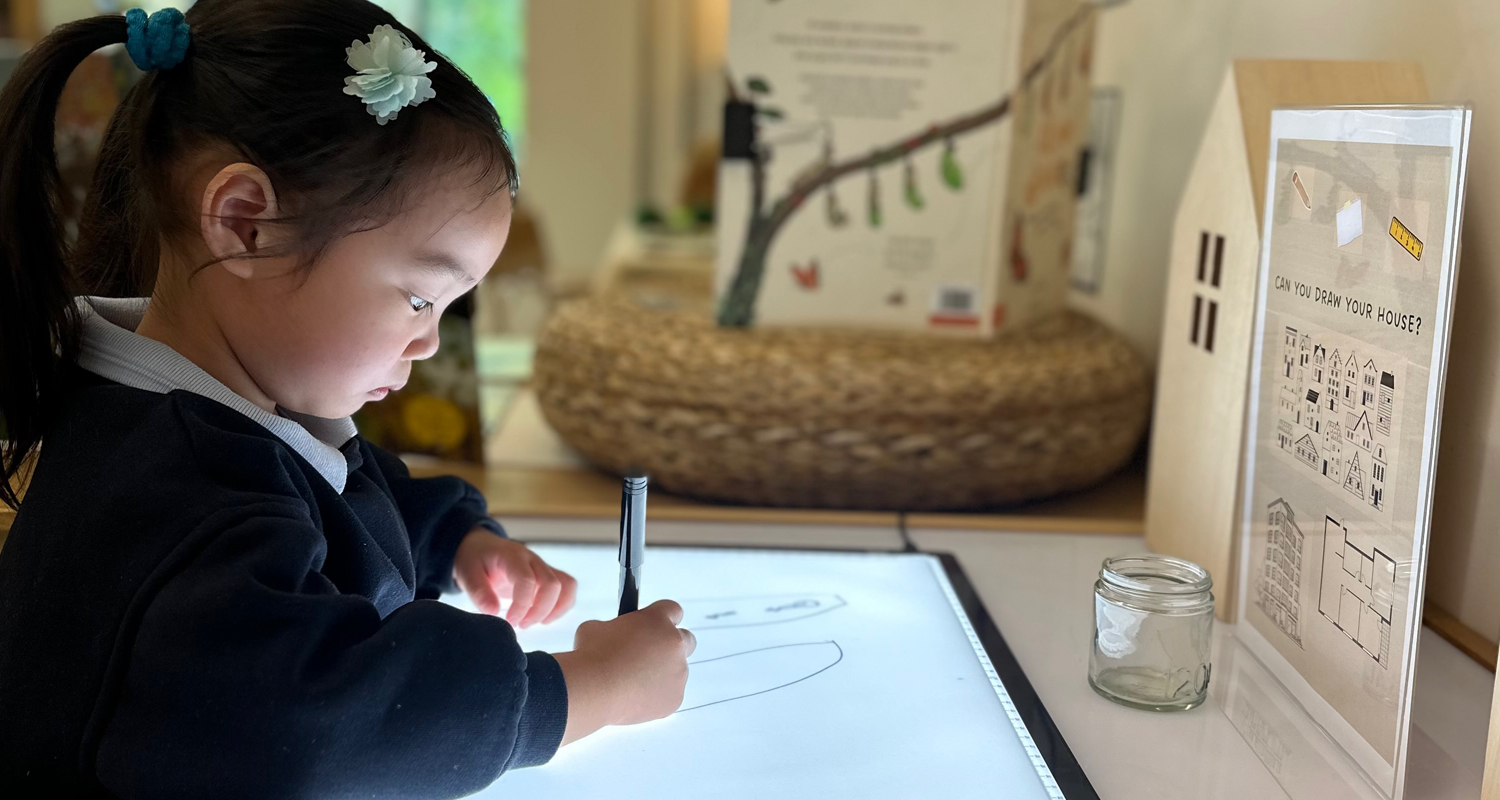
As we draw to the close of another rich and rewarding term, and the end of my first semester at Camberwell Girls Grammar School, I find myself reflecting on the extraordinary capacity of children to bring curiosity, joy and connection into our daily lives. There is something deeply hopeful in the way young children engage with the world, with openness, wonder and an innate desire to connect with others. Recently, I enjoyed reading reflections shared by Her Royal Highness, The Princess of Wales in her recent essay on early childhood, where she speaks of the importance of creating the conditions for love, connection and creativity to enable children to flourish. She reminds us that in a world often dominated by busyness and distraction, it is through nature, play and authentic human connection that children develop the qualities that matter most – empathy, curiosity and a deep sense of belonging.
This strongly resonates with what we see each day across our Early Learning Centre and Junior School. Whether it is a moment of collaborative play, time spent outdoors discovering the natural environment, or the quiet confidence that grows through trusted relationships, these experiences are not incidental. They are foundational. It is therefore with immense pride that I share the outstanding news that our Early Learning Centre has once again been awarded an Exceeding rating across all seven standards of the National Quality Framework. This is a remarkable achievement. The National Quality Standard assesses early childhood services across seven key areas, including educational program, health and safety, relationships, environment, and leadership. An Exceeding rating is awarded only when practice consistently goes above and beyond expectations, when it is embedded, reflective, and shaped by strong partnerships with families and community. To achieve this level across all seven standards is exceptional. To sustain it over time, as we have, speaks to a deeply embedded culture of excellence.
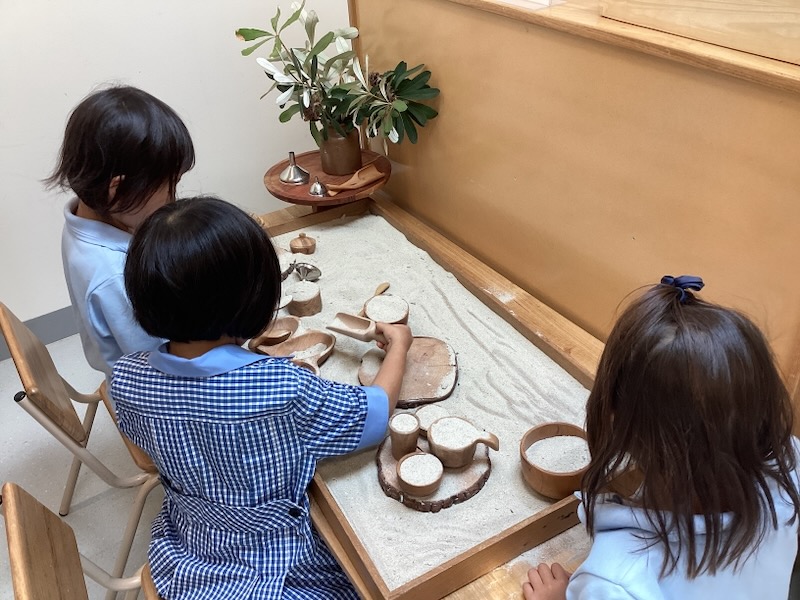
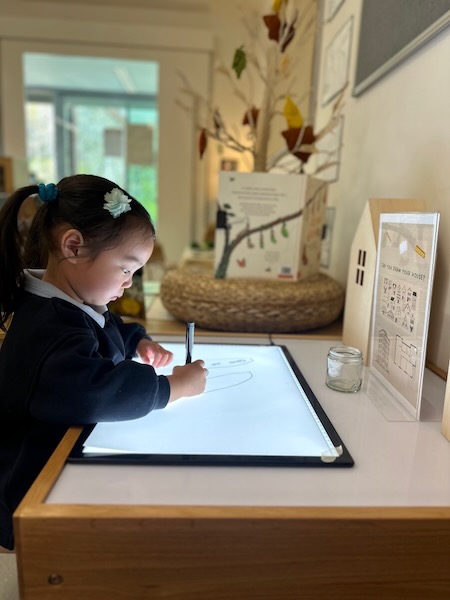
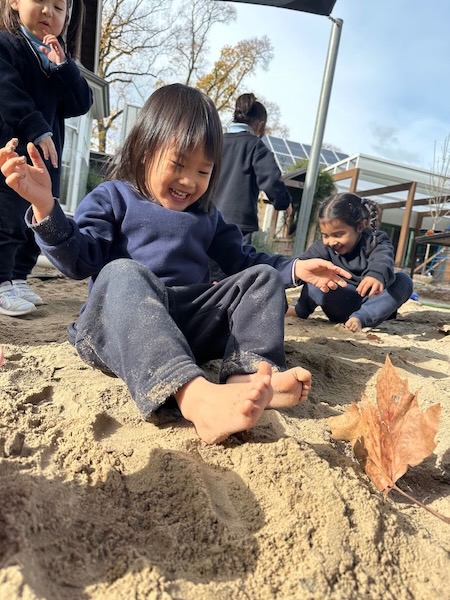
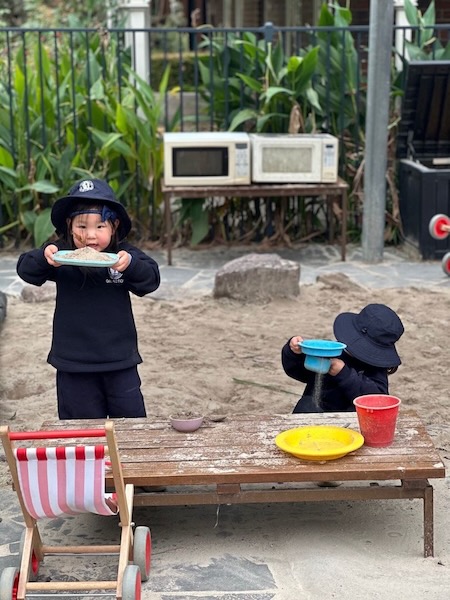
This recognition does not come from a single moment or initiative. It is the result of daily, intentional practice. Of educators who listen deeply to children, who continually reflect on and refine their work, and who hold a shared commitment to placing children’s wellbeing and development at the centre of all they do. Our ELC team embodies this commitment each day with care, professionalism and heart. They create environments where children feel safe, known and valued; where imagination is nurtured; where relationships are strong; and where each child is encouraged to express themselves in their own unique ways.
On behalf of our whole community, I would like to extend my sincere thanks and congratulations to our ELC team, led by Esther Wong and more recently, Eva Szymanski. Their work is visible in the joy of our children and enduring in its impact.
As we look ahead, this achievement invites us to reflect on what truly matters in education. Beyond programs and structures, it is the quality of relationships, the strength of community, and the conditions we create for children to thrive that make the greatest difference.
In nurturing these conditions through connection to each other, to creativity and to the natural world, we are not only supporting children in the present but laying the foundations for their futures.
Thank you to our ELC team, and to all members of our Junior School community, for the care, dedication and professionalism you bring each day. It is a privilege to witness the work you do and the difference it makes.
I wish all our families a restful and rejuvenating semester break. I hope that during this change of pace, students can slow down, spend time in nature, play freely, and enjoy the authentic human connections that nurture empathy, curiosity and a deep sense of belonging.
We look forward to seeing everyone on day one of Term 3, Tuesday 14 July 2026.
Kellie Morgan
Head of Junior School
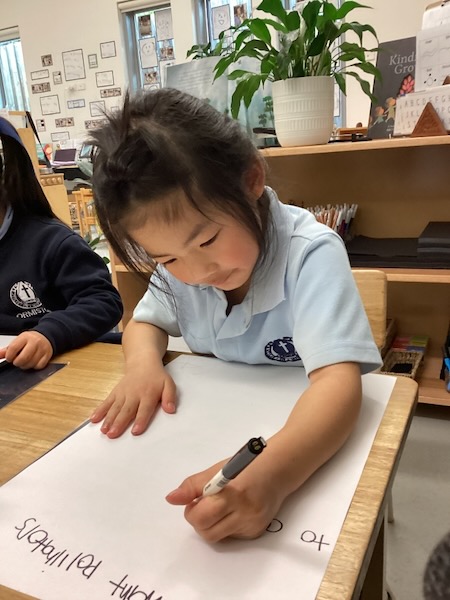
Throughout this term, as inquirers, communicators and collaborators, the Early Learning 4 Full Time children researched pollination and pollinators and the significant role that bees, birds, butterflies and bats have in our garden at school. As curious learners and researchers, the children engaged with video clips, photographs, and factual text and discovered that:
The bumblebees, the bats, the birds, and the butterflies are pollinators. They get pollen from the flower, and they go to another flower, and they leave some pollen and new plants and fruits grow. Millie
Bees and butterflies and birds are pollinators. They get pollen from the flower and take the pollen to other flowers. We get fruit and vegetables to eat morning tea and lunch. Lina
The bee gets the nectar and pollen, and the bee takes the nectar from the stigma. Micheline
The bird’s beak gets pollen from the flower. Birds and butterflies go to the stigma and then they go to another flower – they take the pollen. Bees take the nectar to the beehive to make honey. Audrey
The bat gets the pollen from the flower and goes to another flower. Sophie
The bat gets pollen and has a long tongue, and it gets nectar on its tongue. The bird gets nectar from the flower. The bird has a long beak and gets pollen. Isabella
The bees get pollen and nectar from the flower. Evelyn
Bees get nectar. Bees get pollen. They take it to their beehive and they make honey. Anne
The butterfly gets pollen from the flower. They get pollen from the stigma. Omisa
The bee gets the pollen and then takes it back to its hive and makes honey, and they get nectar to make honey. Tahlia
This little beak cannot reach in a long flower. The long beak can reach in a long flower. Hazel
The bees drink the nectar, and the pollen sticks to their head. The bee goes to another flower and leaves the pollen. Ella
The butterfly has a long thing like a straw that can sip all the nectar. Anabelle
That’s called a proboscis. Hazel
The butterfly gets the pollen from the flower. The butterfly gets the nectar with its straw. Oriana
The bird has a long beak, and he puts it into the narrow flower, and the pollen gets on his head or beak. Kaeylie
Birds fly and bats get in the tree. Birds and butterflies pollinate flowers. Bees make honey in the beehive. Natalia
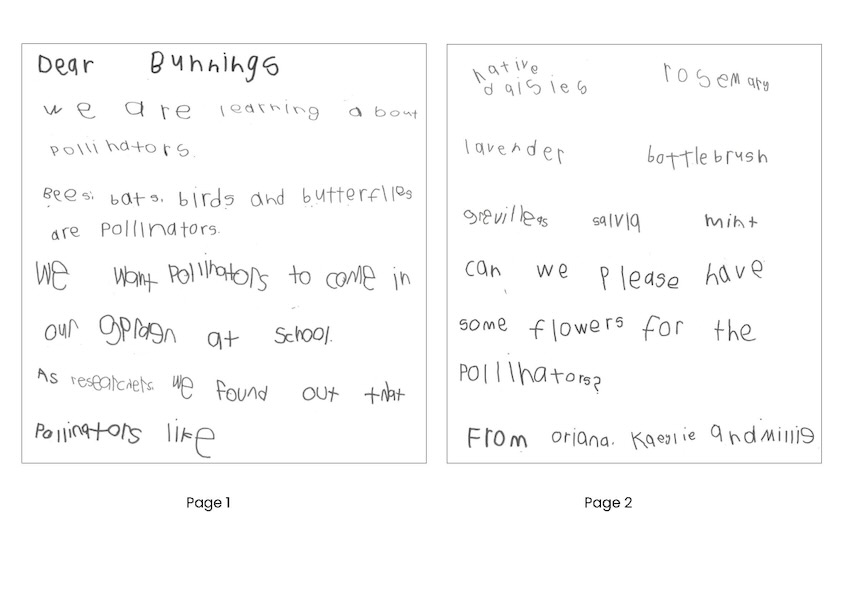
As curious learners, the children wondered what flowers and plants would attract pollinators to our Early Learning garden. We connected with the environmental educator Costa Georgiadis and discovered that we should choose a variety of indigenous and native plants that bloom at different times of the year because this will ensure a continuous supply of pollen and nectar for pollinators. The children discovered what flowers bees, butterflies, honeyeaters, Rainbow Lorikeets and butterflies prefer and wrote a list of these plants. As communicators and citizens for change, the children, led by Kaeylie, Millie and Oriana, emailed a letter to Bunnings Hawthorn to request support with donating some plants that would attract pollinators to our Early Learning garden. The children received a very warm reply from Kristina Bicknell, the Administration Supervisor from Bunnings. The email informed the children that Bunnings will provide vouchers to the total of $150 so they can choose their own plants for the pollinators. Next term, the children will collect their vouchers from Bunnings and choose plants that will attract pollinators, and these will be planted in our Early Learning garden.
During this inquiry the children demonstrated their ability to be connected, confident, and communicative learners. As they actively incorporated scientific terms like stigma, anther and proboscis into their discussions, they demonstrated their communication skills, successfully using language to co-construct knowledge and share their discoveries. The children also developed inquiry, problem-solving, critical thinking and investigative skills. Learning about pollination and pollinators, connected children directly to the natural world, fostering early environmental stewardship and scientific curiosity. By discovering how animals like bees, birds, and bats help plants grow, children develop a foundational understanding of ecosystems and biodiversity. This inquiry transformed how children view their everyday environment, helping them link flowers in gardens directly to the food on their plates. Developing an understanding of these interconnected relationships at an early age builds critical thinking skills and inspires a lifelong respect for protecting animals on Country.
Angela Follacchio
Early Learning 4 Teacher
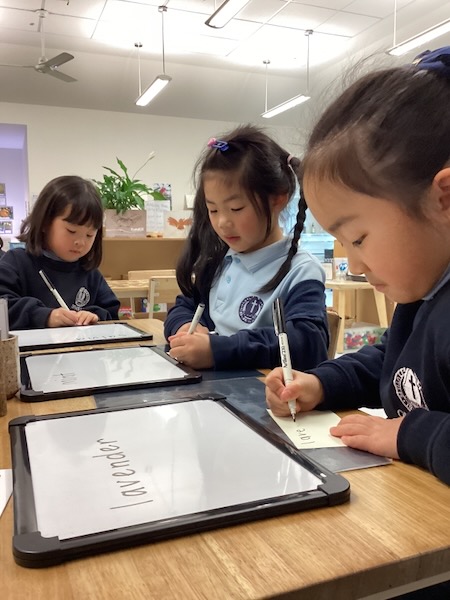
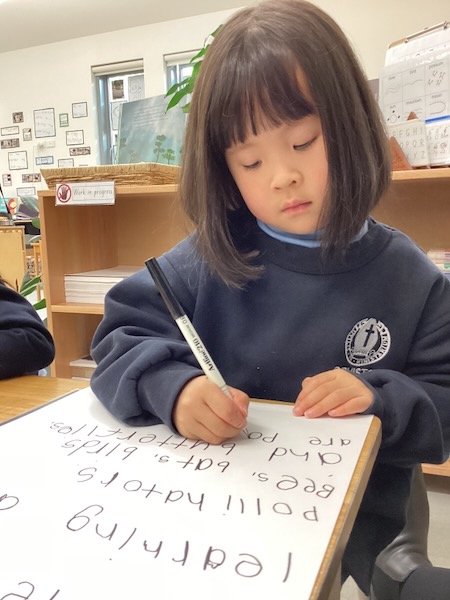
Our connections matter. No single organism changes a forest alone. Plants and trees need sunlight and water, but fungi provide and share nutrients in forests. Together, with a strong connection, environments can thrive. This is also true of a school.
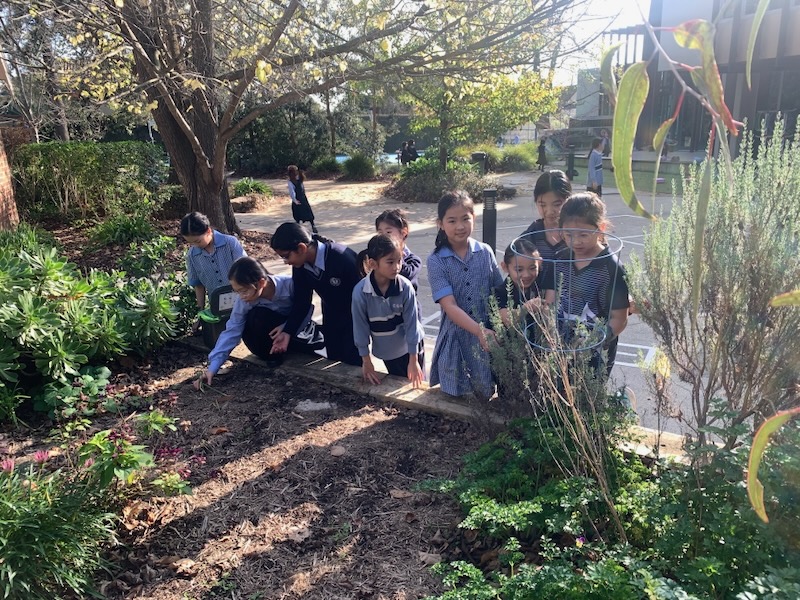
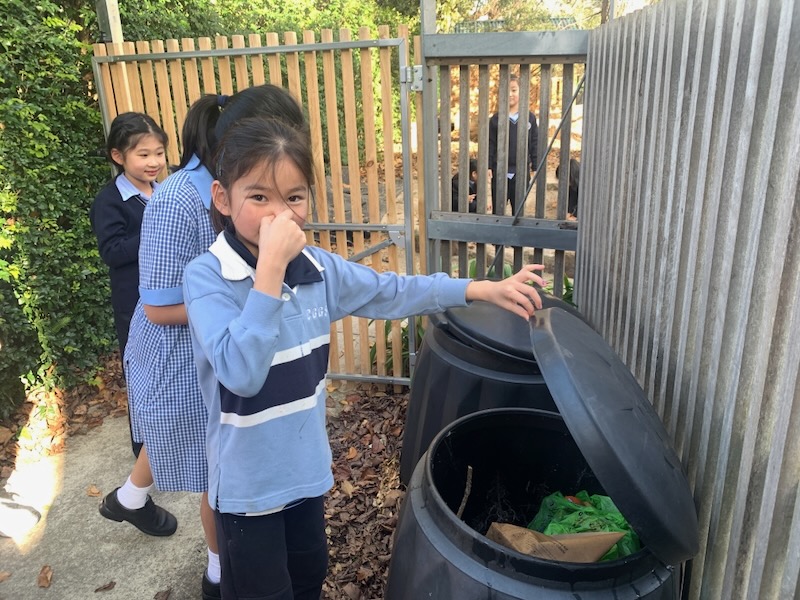
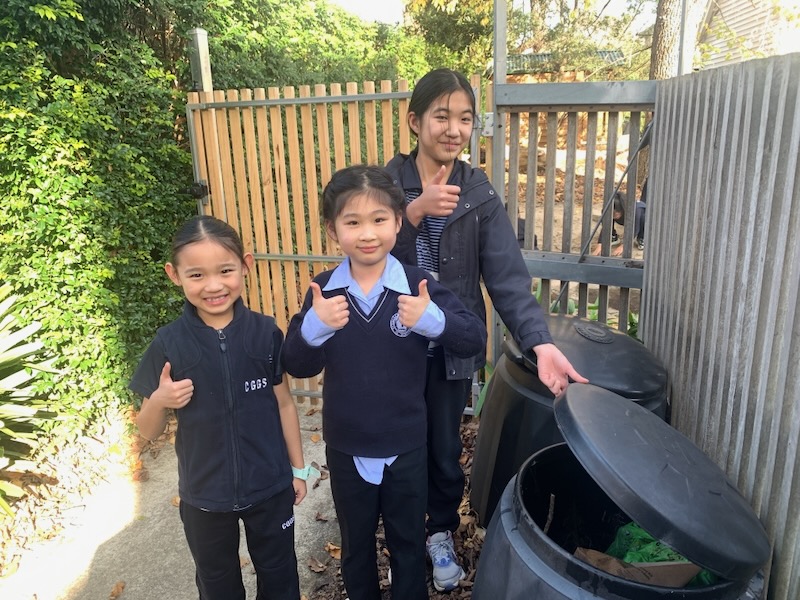
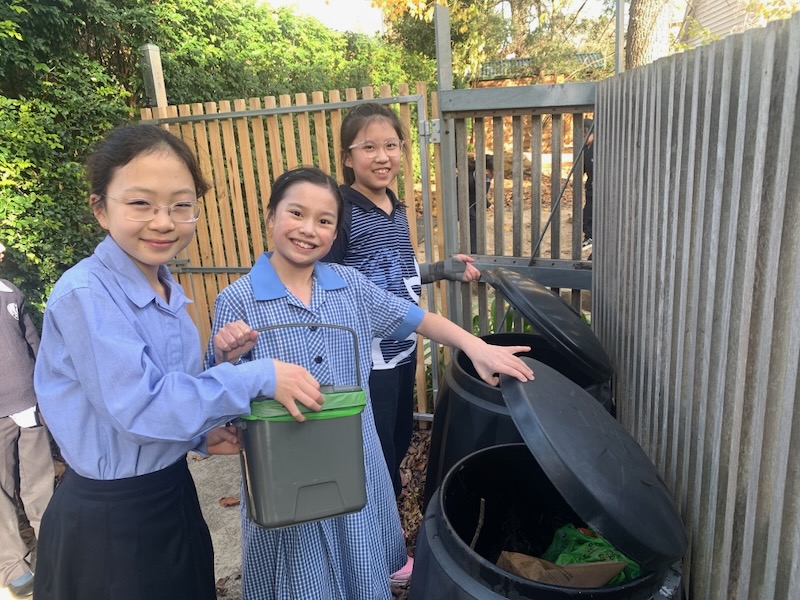
During environment week, the Sustainability Squad leaders have been enacting change. In addition to planning and conducting meetings to develop a shared sense of values, concerns and solutions for our school, Lahaina, Alice and Mia work together with class representatives to create a climate of learning where we can make a difference.
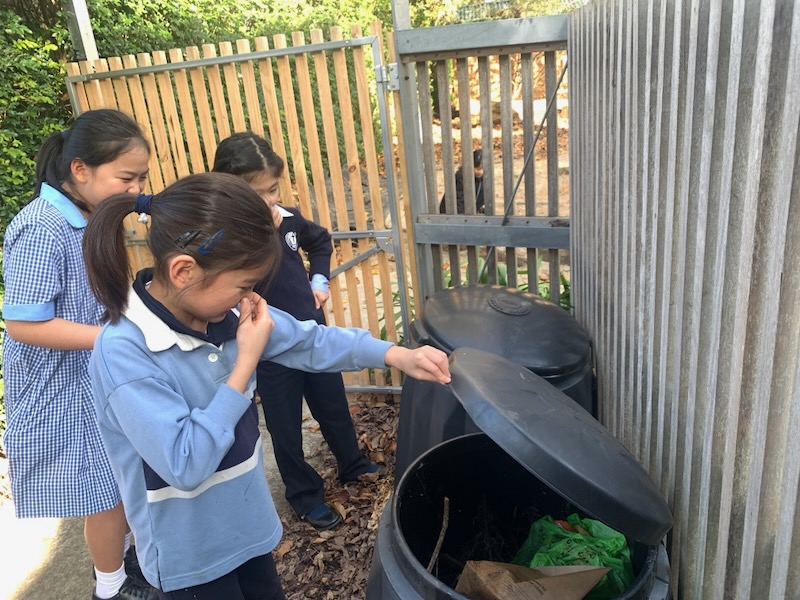
Leading the relaunch of the compost bins, the leaders have given students a sense of responsibility and ownership over their school environment. Tending to a school compost bin or garden helps students feel that they are active participants in protecting our environment.
The students have explored the importance of soil health and the processes of decomposition. Students have learnt about the natural processes of composition and the role of biology, particularly in how microorganisms break down our food waste.
Through the strong connections in the composting process, and the students’ connections through our Sustainability Squad meetings, we can create a more sustainable environment.
Craig Goodwin
Year 5 Classroom Teacher
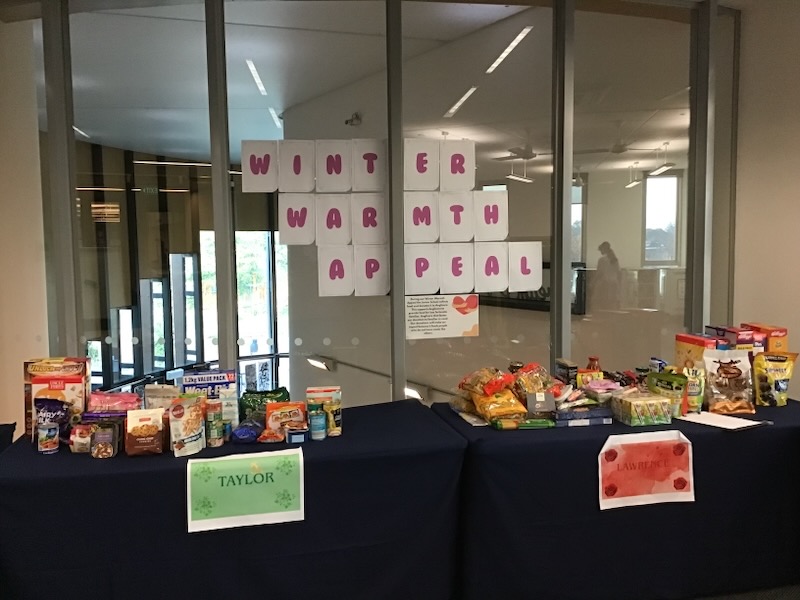
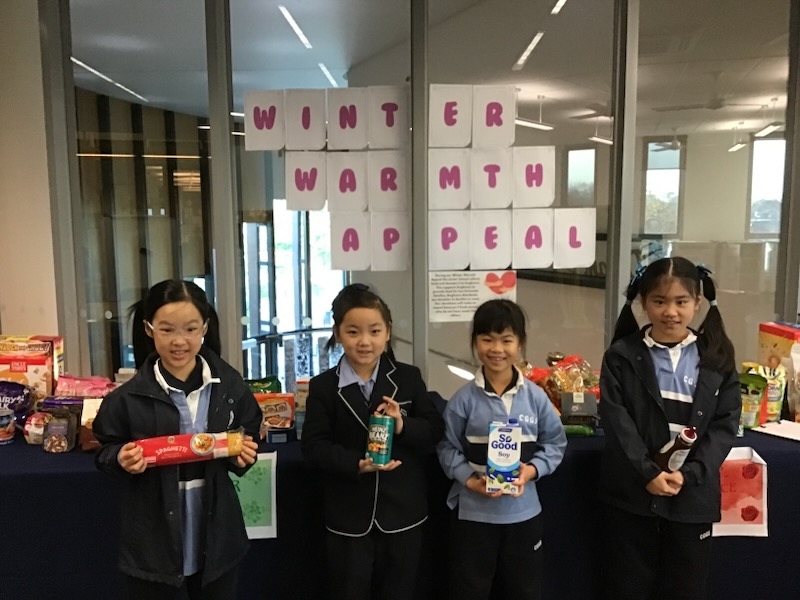
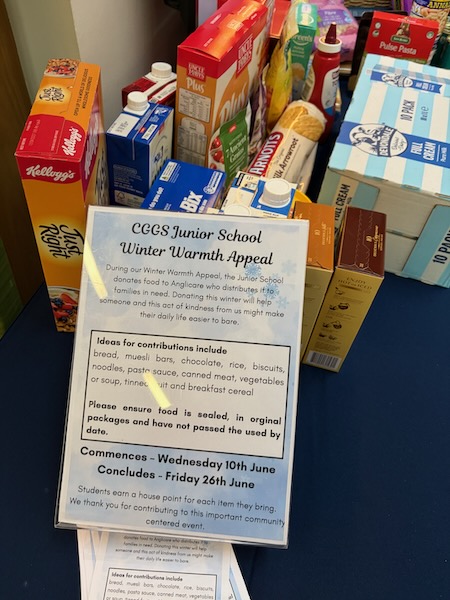
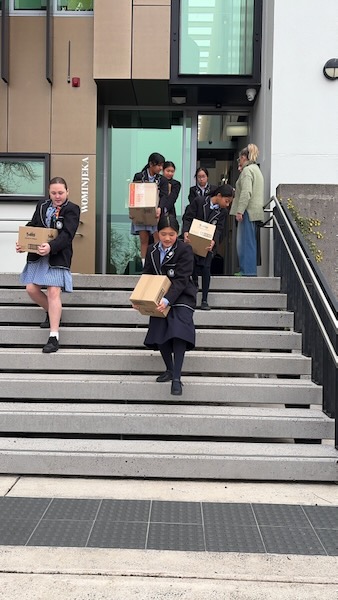
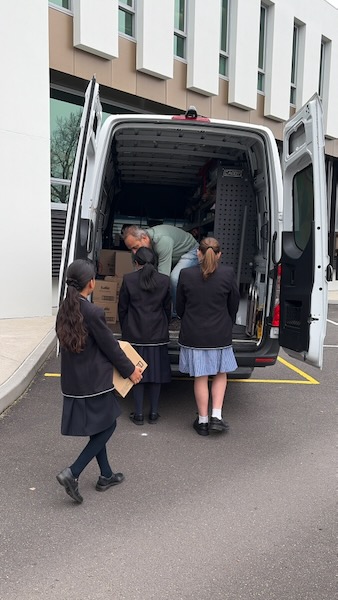
It has been heartening to see the CGGS community come together in support of those experiencing hardship this winter. Thanks to the generosity of our community, a record number of donations were collected by Anglicare on the final day of term.
These contributions will help provide food parcels to individuals and families across Victoria who are facing challenges in putting food on the table during the colder months.
Congratulations to our Social Service Leaders and Semester One Student Representative Council members for their outstanding efforts in organising and promoting this important initiative. Thank you to the entire CGGS community for your generosity, compassion, and support in making a meaningful difference to the lives of others.
Selena Reedman
Year 2 Classroom Teacher

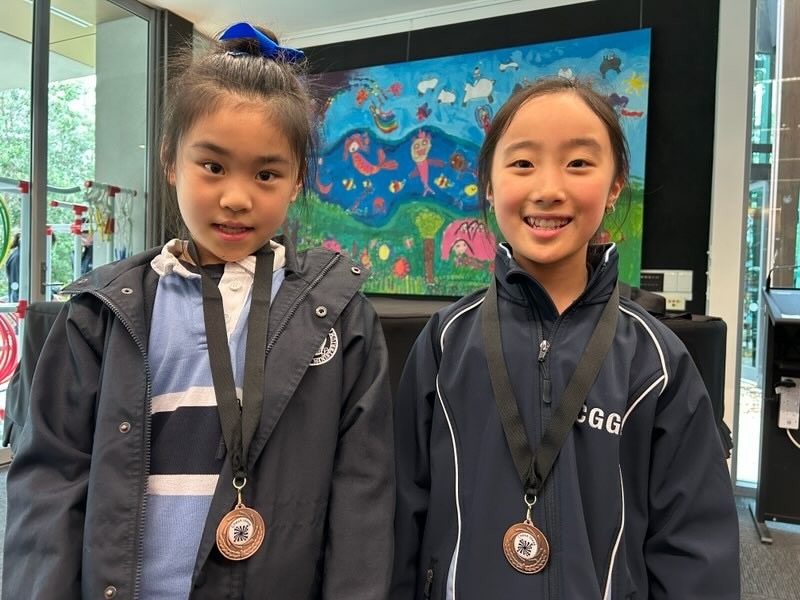
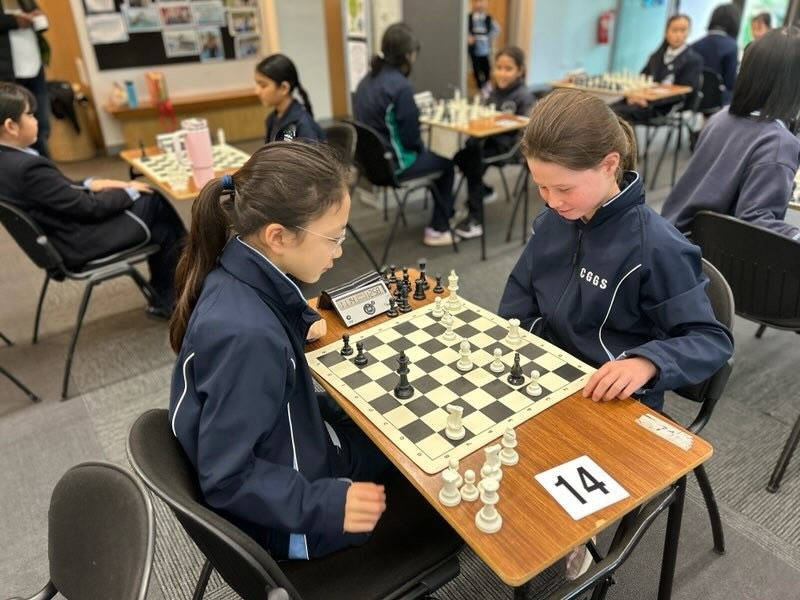
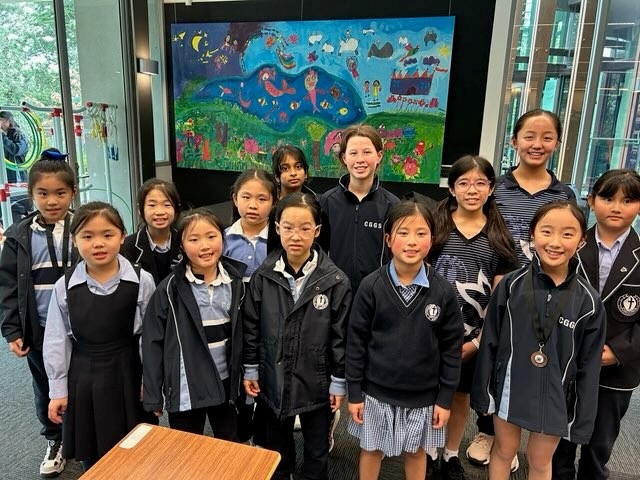
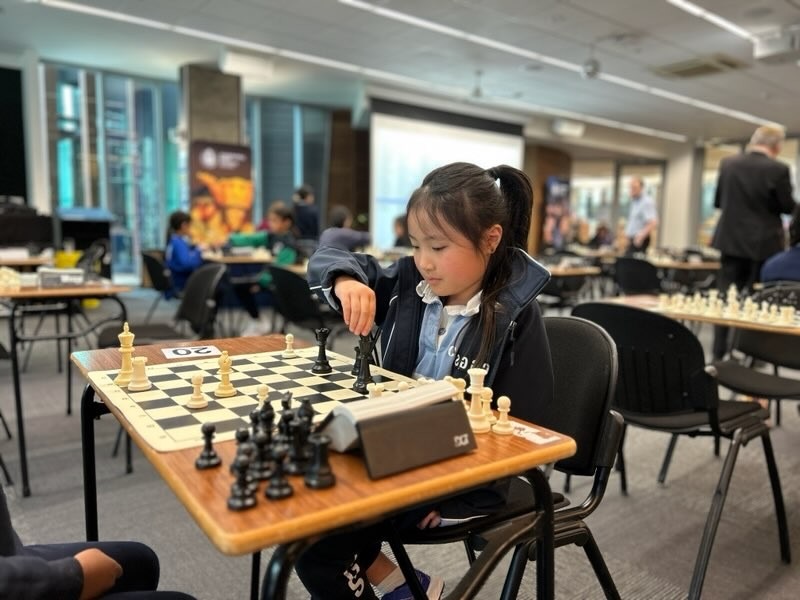
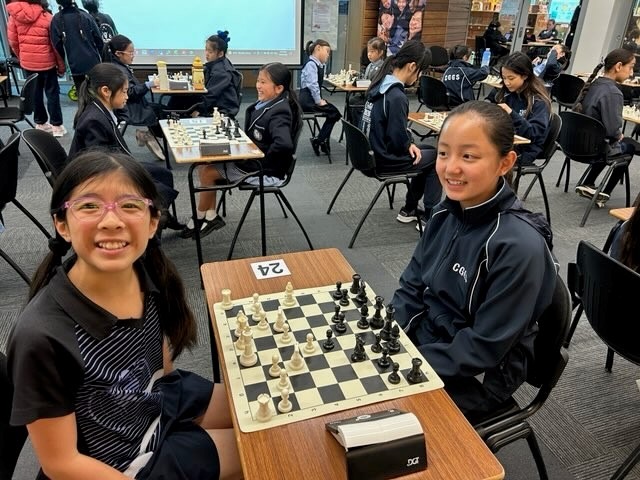
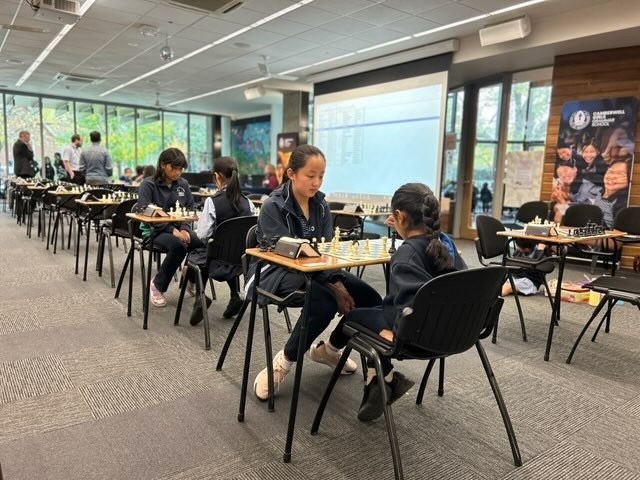
Camberwell Girls Grammar School was proud to host the annual Girls Chess Tournament, welcoming students from eight schools across Melbourne for a day of intellectual challenge, strategic thinking, and friendly competition. The event, coordinated in partnership with Chess Ideas, has become a longstanding tradition, with the tournament having been held at the Camberwell Girls Junior School for 20 years. The tournament brought together talented young chess players who demonstrated concentration, resilience, and sportsmanship throughout the seven rounds of competition. Every game challenged students to think critically, plan, and adapt to changing circumstances, all essential skills that extend well beyond the chessboard.
Camberwell Girls Junior School team consisted of ten students: Jasmine L & Odette K from Year 2, Olivia Z from Year 3, Jessie W and Audrey S from Year 4, Charlotte G & Joann K from Year 5 and Estelle K, Sophie T and Aryana P from Year 6. At the conclusion of the tournament, teams from Glen Waverley Primary School, Lauriston Girls’ School, and Glendal Primary School were recognised as the top three schools, securing places in the State Finals later this year. Camberwell Girls Grammar School finished in an impressive fifth place overall among a strong field of competitors. Several Camberwell Girls students achieved notable individual results. Estelle K was the highest-placed Camberwell Girls competitor, finishing among the tournament’s top performers with five points from seven rounds. Other strong performances came from Jasmine L, who scored four points.
The success of the chess tournament is largely due to the weekly Chess Club co-curricular available to students on Wednesday lunchtimes provided by Chess Ideas Australia. If your child would like to learn to play chess further information can be found in The Junior School Weekly.
Events such as the Girls Chess Tournament provide important opportunities for students to develop confidence, problem-solving skills, perseverance, and strategic thinking while forming connections with students from other schools. Camberwell Girls Grammar School is delighted to continue supporting girls in chess and thanks all participating schools, students, staff, and volunteers for contributing to another memorable and successful tournament.
Nancy Robottom
Deputy Head of Junior School
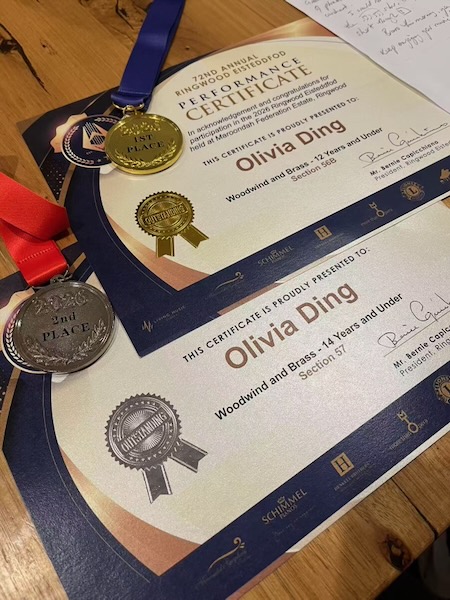
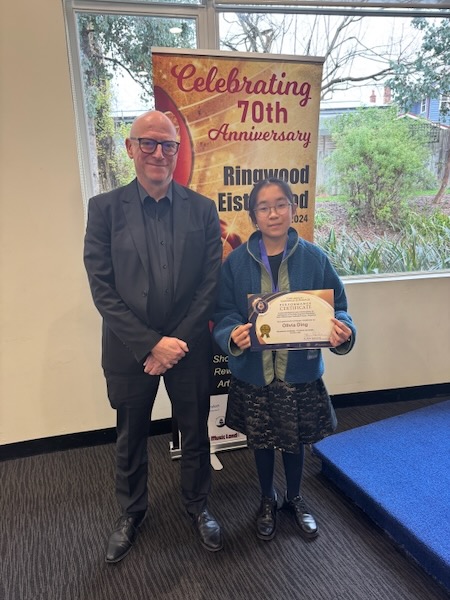
Olivia D (6H) recently participated on the French Horn in the Ringwood Eisteddfod, achieving outstanding success across two competitive sections. We are delighted to share that she was awarded first place in the Under 12 Woodwind and Brass section and second place in the Under 14 Woodwind and Brass section, an impressive accomplishment reflecting her musical skill and dedication.
In the Under 12 section, Olivia performed Morceau de Concert by Camille Saint-Saëns. Competing in the older age group of the Under 14 section, Olivia performed the third movement, Lebhaft, from Sonata for Horn in F Major by Paul Hindemith. These demanding and expressive works showcased her technical control and musicality.
Participating across two age divisions is an outstanding achievement, and Olivia’s results highlight her commitment and passion for music. We warmly congratulate her on this success and look forward to seeing her continued growth as a young musician.
Kate Savige and Rohan Mack
Directors of Music
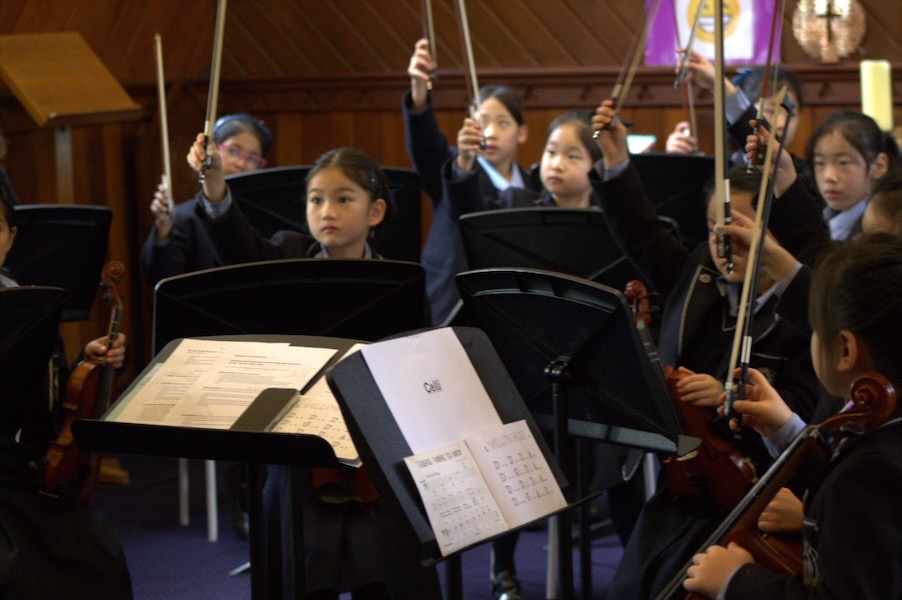
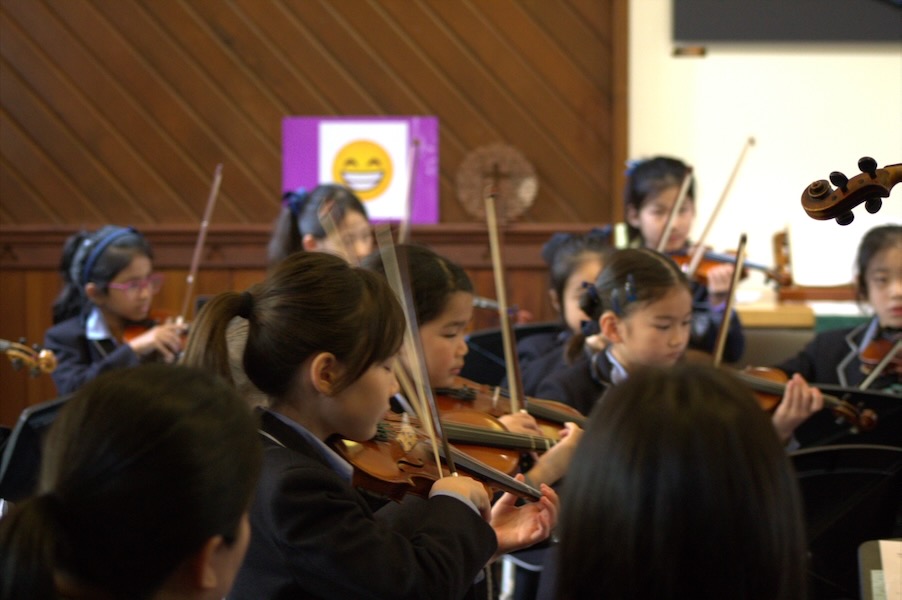
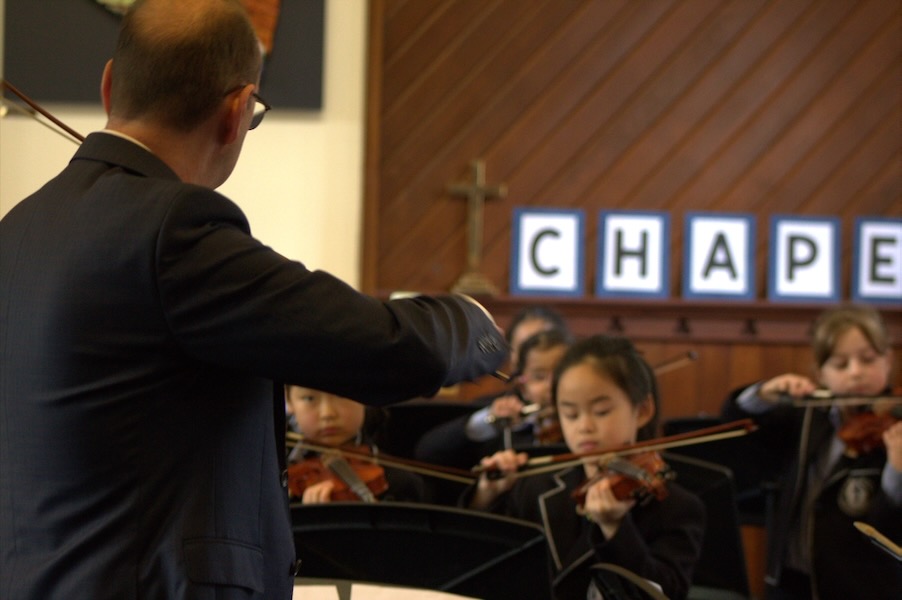
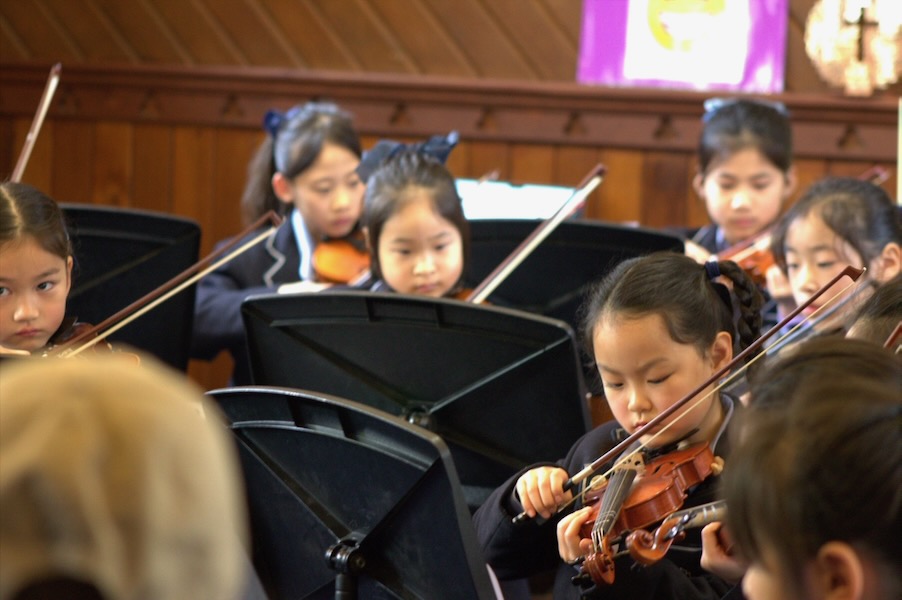
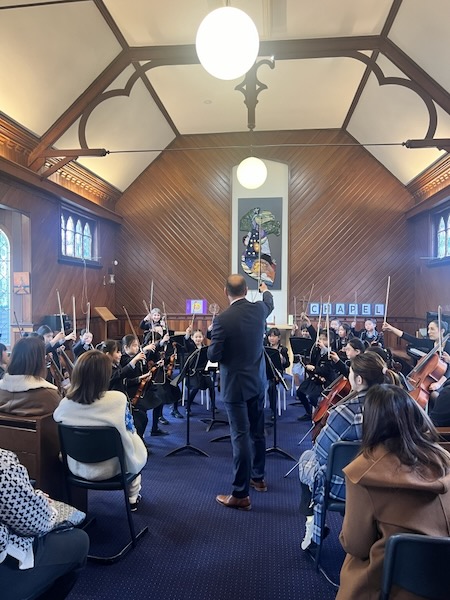
The Year 2 Strings has had a very productive Semester culminating in an Open Classroom presentation to parents and certificates of completion to students.
The Year 2 Superstrings Open Classroom provided a valuable opportunity for parents and friends to observe the teaching and learning of string instruments; the violin, viola, and cello within the Strings Year 2 program.
Learning a string instrument engages students in a rich sensory environment that fosters a wide range of developmental skills. These include auditory and visual processing, coordination, fine motor control, balance, and kinaesthetic awareness. All these elements are nurtured in a collaborative, supportive, and joyful setting.
Students played with such confidence, poise and enjoyment. Sincere thanks to all who attended, and to the dedicated string teaching team: Mr Rohan Mack, Ms Nichole Adams, Ms Laura Tcheupdjian. Thankyou also to the Year 2 class teachers Anjali de Quadros and Selena Reedman as well as Deputy Head of Junior School, Nancy Robottom.
Special thanks also to Reverend Helen Creed for generously hosting the event in the beautiful and intimate setting of the Chapel.
Rohan Mack
Head of Strings
Director of Music – Instrumental
It has been a busy start to Term 4 with Year 11 - 12 Presentation Evening and many musical achievements.
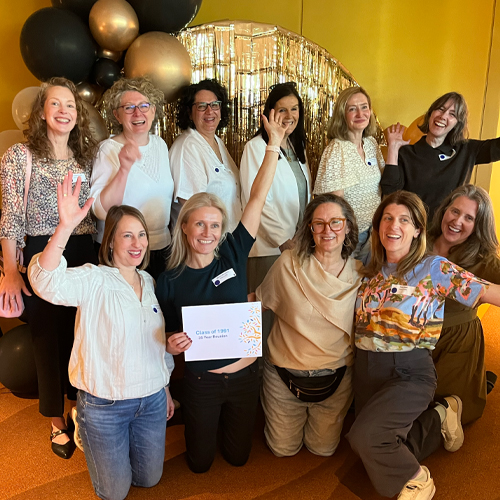
Over 100 Old Grammarians returned to Camberwell Girls last weekend for the annual Reunion Weekend.