We warmly welcome our students and families back to school for Term 2. It has been a joy to see the grounds full of smiling faces once again and to feel the energy and enthusiasm that the children bring each day. The start of the term has been a wonderful one, with students settling quickly into routines and engaging positively with their learning and with one another.
It has also been lovely to reconnect with our families and to share in the many moments that make our Junior School such a special community. We are proud of how well the term has begun and grateful for the ongoing partnership between home and school. As we look ahead to the remainder of Term 2, we are excited for all that lies ahead and the many opportunities for learning, growth and connection still to come.
At Camberwell Girls Grammar School, we are committed to nurturing a learning environment where every girl feels safe, confident and connected. Central to this is our focus on wellbeing, belonging and the development of respectful, healthy relationships. Guided by our School Values of Integrity, Respect, Courage, Commitment and Hope, we actively support our students to build strong social and emotional skills.
As part of this commitment, to compliment our BRAVE program, we are implementing a whole‑school approach to explicitly teaching friendship skills. URSTRONG is an evidence‑informed wellbeing program that provides students with a shared language and practical strategies to navigate friendships with confidence, kindness and self‑compassion.
Through the Friendology 101 curriculum, students are encouraged to:
To strengthen the partnership between School and home, we invite you to activate your free URSTRONG Parent Membership, providing access to a wide range of high‑quality resources, including an engaging video series, articles and practical tools that align directly with what your child is learning at school. Using a shared language at school and at home helps reinforce key messages and supports consistent, positive conversations about friendships.
As a next step, we encourage you to:
We believe that explicitly teaching friendship skills is a powerful way to nurture confident, compassionate and resilient young people. Together, as a community grounded in shared values, we can support our students to develop healthy, positive and empowering friendships.
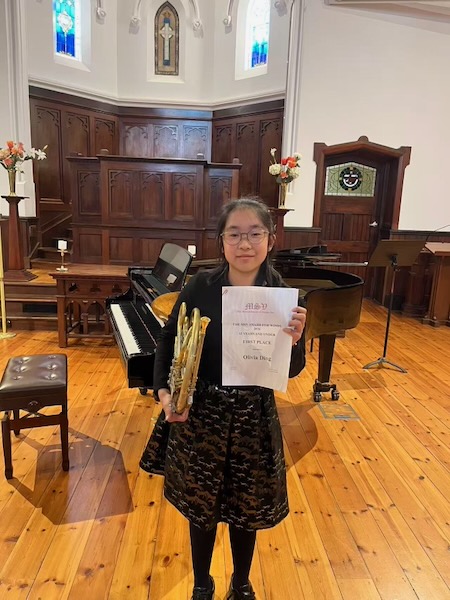
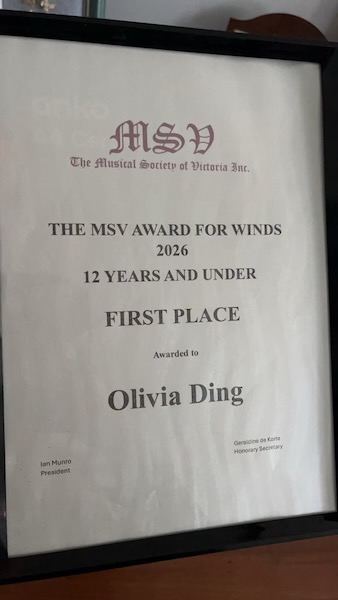
Congratulations to Olivia D who achieved an outstanding result at The Musical Society of Victoria competitions in March 2026. Performing on the French horn in the 12 Years and Under Wind section, she was awarded first place, an exceptional achievement that reflects many hours of dedicated practice, musical skill, and confidence as a performer.
This is a wonderful accomplishment, and we warmly congratulate Olivia on this impressive success.
Kellie Morgan
Head of Junior School
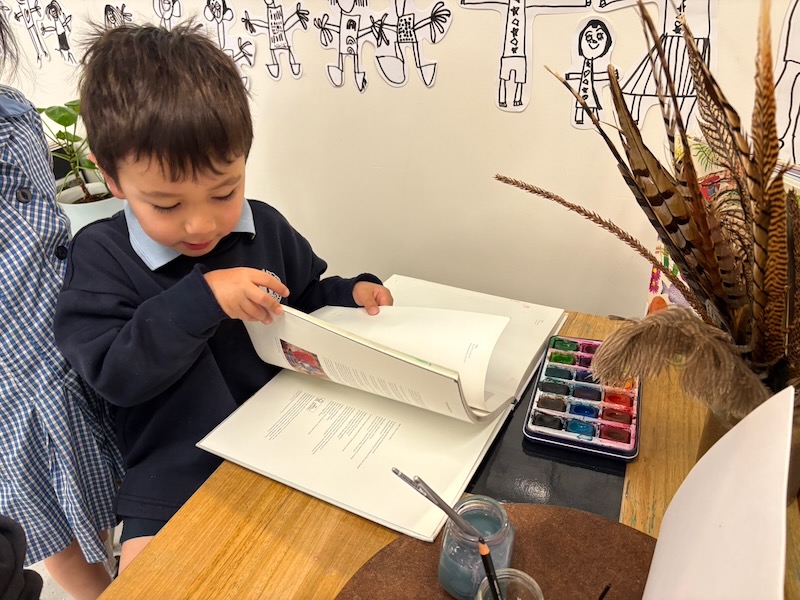
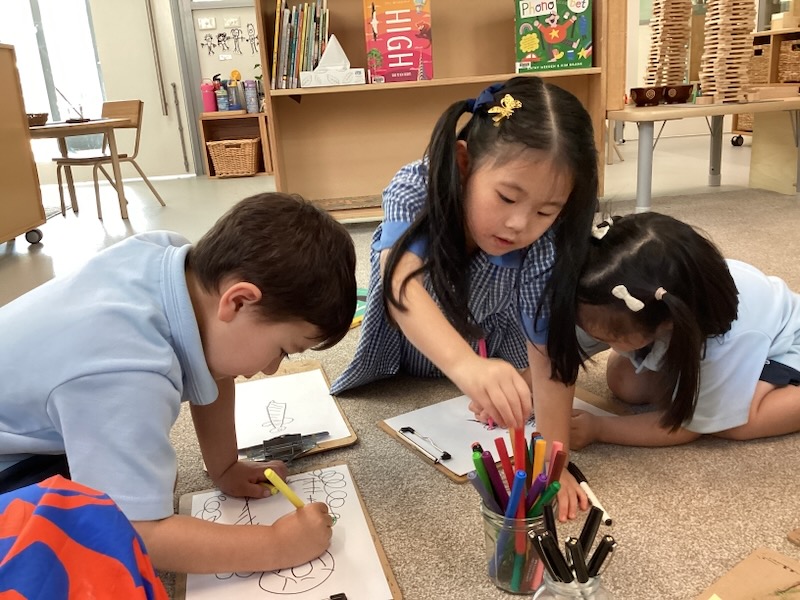
In the Early Learning 4 Part Time classroom, our inquiry this term has evolved around the concept of pollinators, with children’s ideas placed at the heart of the learning. Building on experiences from Mrs Bishop’s Art class in Term 1, the children were invited to share their existing knowledge about pollinators through discussion, drawing and creative expression.
This inquiry builds on children’s prior experiences in Mrs Bishop’s Art class in Term 1, where they explored nature, colour and representation through creative processes. Drawing on these connections, children were invited to share what they already knew about pollinators through rich discussion, drawing and creative expression.
As children contributed their ideas, their thinking was captured collaboratively through the creation of a mind map. This documentation process supports intentional teaching by making children’s understanding visible, highlighting misconceptions, and identifying directions for deeper investigation. During these conversations, children shared knowledge about birds, insects, flowers, pollen, nectar and honey, while also posing thoughtful questions that are now shaping the direction of the inquiry.
Children demonstrated emerging scientific understandings as they identified bees and birds as pollinators and recognised the important role pollinators play in supporting plant growth, reproduction and seed production. They shared detailed knowledge about how bees collect nectar and pollen, how honeybees live socially in hives, and how native Blue Banded Bees live independently, often nesting in small holes in clay. These discussions reflect early skills in observation, classification and systems thinking, as children began to understand relationships between living things and their environments.
Children’s questions throughout the inquiry revealed strong dispositions for learning, including curiosity, critical thinking and problem‑solving. Wonderings such as “Why do bees need water?” (Cecilia), “How do bees drink without drowning?”(Ella) and “How did honeybees get to Australia?” (Monty) show children engaging with complex ideas related to adaptation, geography, habitats and interdependence. Through collaborative discussions, children are learning to listen to others, share perspectives, make predictions and co‑construct knowledge together.
As an extension of the inquiry, children explored bee anatomy to support their observational drawings. By closely examining and identifying features such as wings, antennae, mandibles and pollen baskets, children developed scientific vocabulary while expressing their understanding through visual arts. This integrated approach supports communication, fine motor development and multimodal literacy, allowing children to represent ideas in multiple ways.
Through this inquiry, children are positioned as capable and confident learners who actively investigate, research, question and reflect on their discoveries. The learning environment is being intentionally adapted to provoke curiosity and support sustained investigation, reflecting our belief in the environment as the third teacher. As the inquiry continues, children will deepen their understanding of pollinators and their vital role in sustaining life, guided by their ongoing questions and interests.
Esther Wong
EL4 Teacher
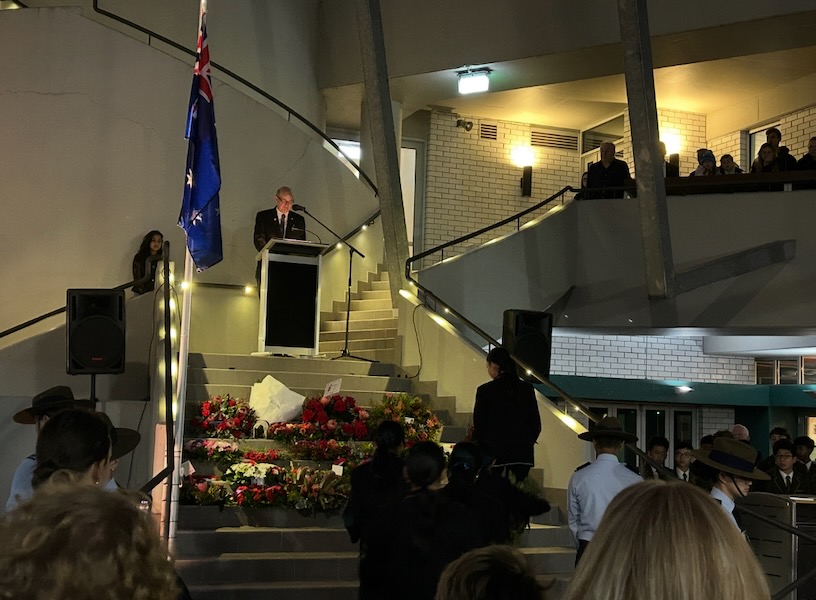
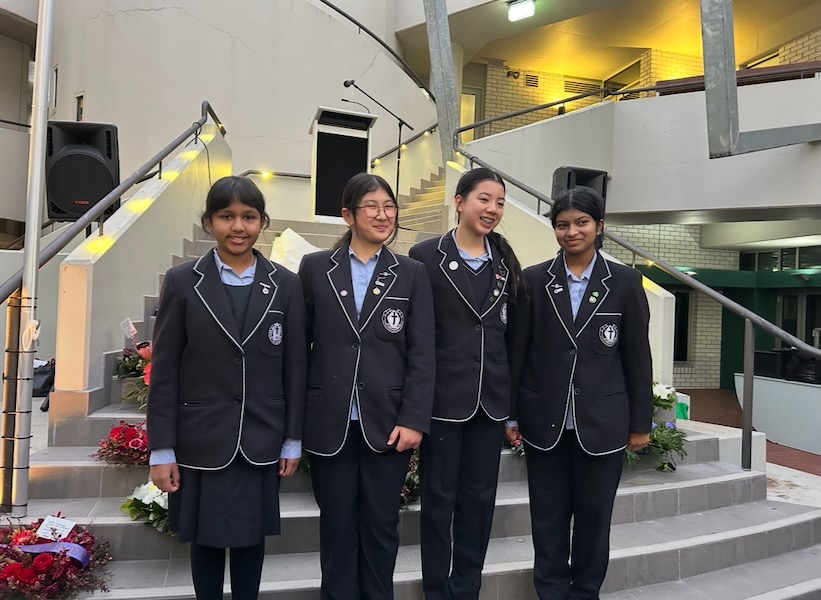
Our Junior School Captains Olivia and Ayati attended the Kew Dawn Service to commemorate ANZAC Day on Saturday 25 April. They laid a floral wreath and tributes of native fauna created by our ELC students, on behalf of the Junior School. The service enabled our students to pay their respects to the service men and women who lost their lives during conflict and reflect on the opportunities we have as a nation due to their sacrifices. In the words of our Junior School Captains,
Attending the Dawn Service made me reflect on the soldiers who sacrificed themselves for us, it was a thoughtful ceremony – Ayati (Year 6G)
This experience gave me the opportunity to further understand ANZAC Day and was a time for me to respect and acknowledge those who sacrificed themselves for the freedom of this country – Olivia (Year 6H)
Margaret Hall
Year 6 Classroom Teacher
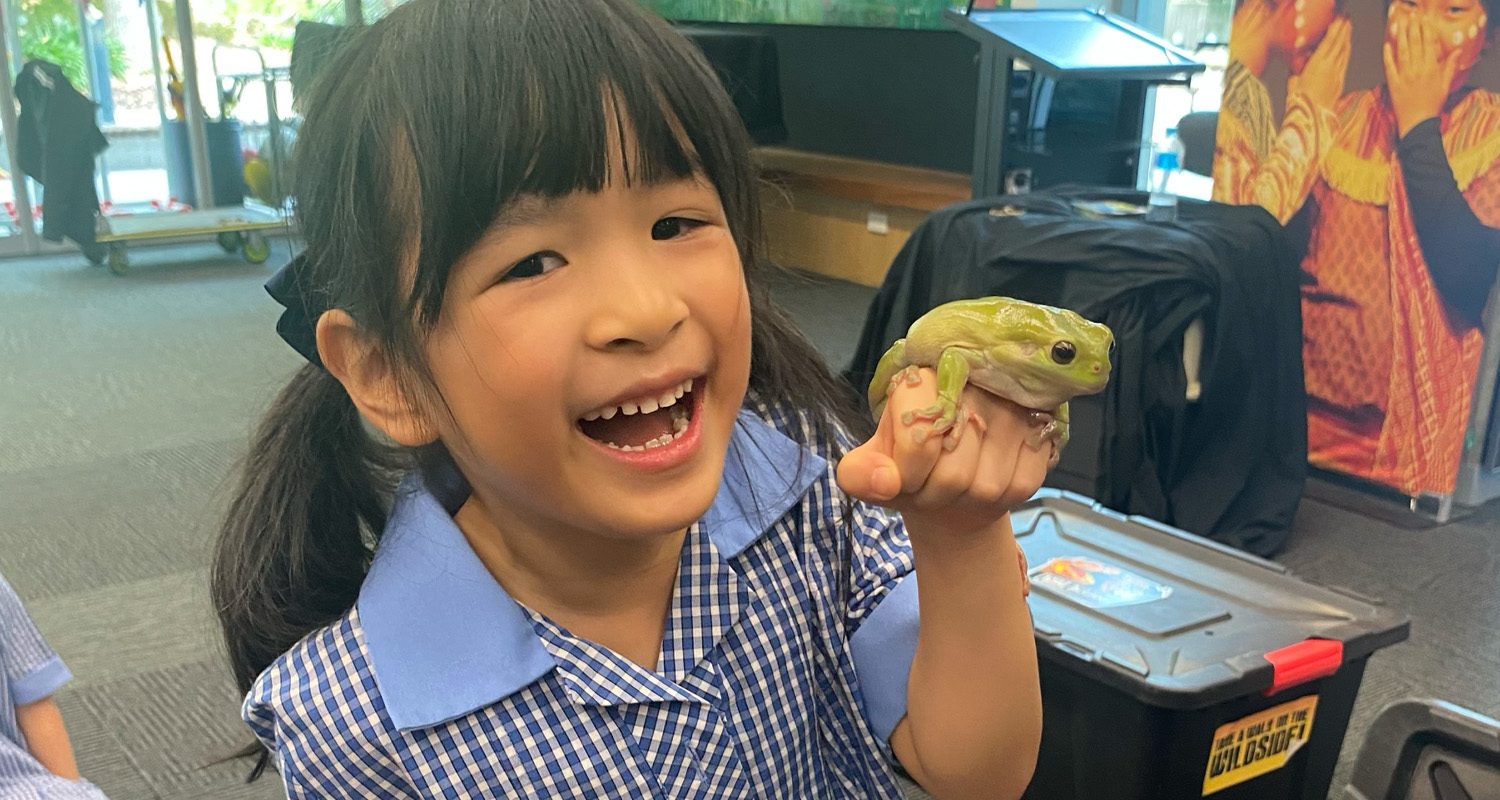
As part of our Term 2 Interdisciplinary Investigation, Year 1 students have been learning about how living things get what they need from the places they live. To bring this learning to life, students recently participated in an engaging Wild Action Incursion.
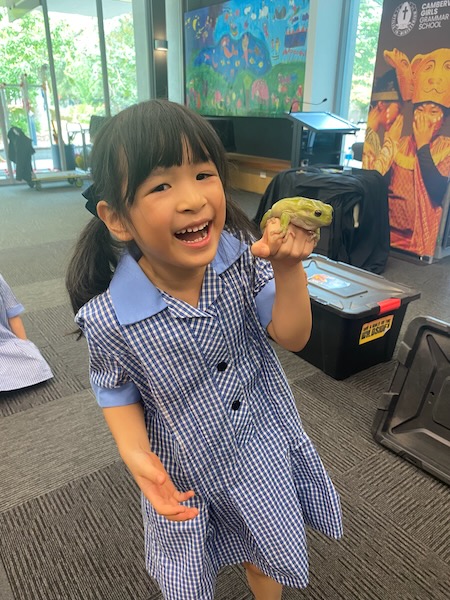
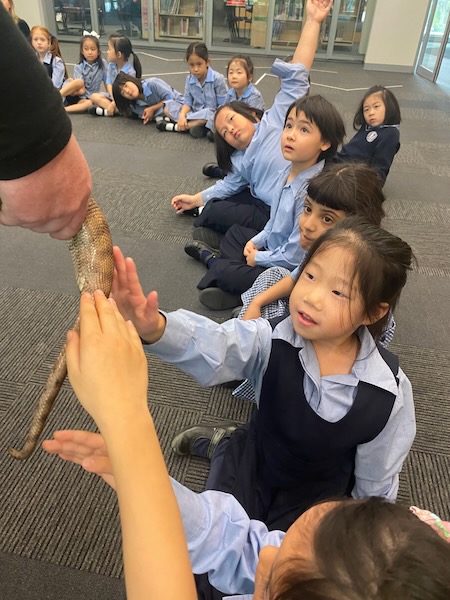
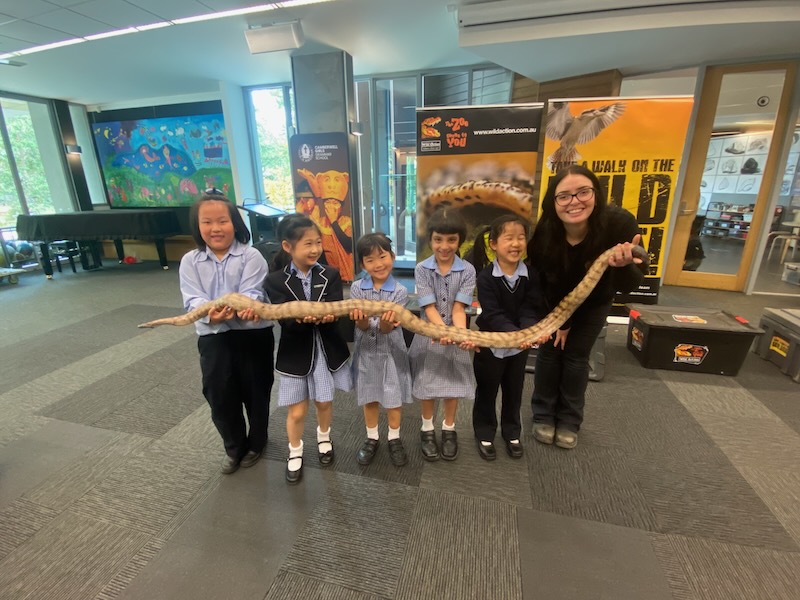
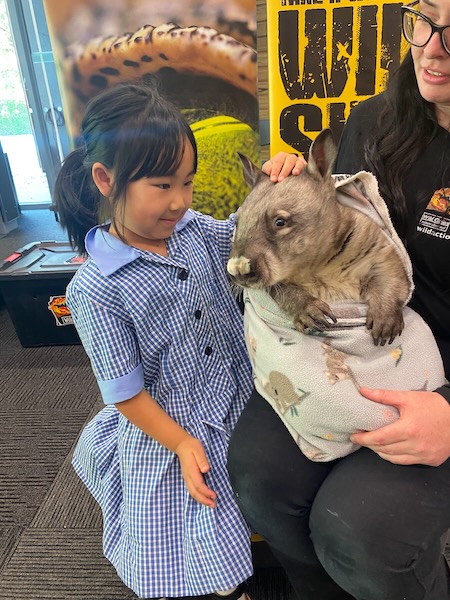
During the interactive presentation, students were introduced to a wide range of Australian animals, including mammals, birds, marsupials, amphibians and reptiles. They had the exciting opportunity to view, touch, and in some cases safely hold several animals. These included a green tree frog, tawny frogmouth, barn owl, freshwater crocodile, eastern long necked turtle, fruit bat, black headed python, echidna, and wombat.
Throughout the session, students learnt about each animal’s habitat, diet, and unique adaptations, as well as the ways humans can impact wildlife. The incursion prompted thoughtful questions and curiosity, helping students deepen their understanding of how animals survive in different environments and why it is important to care for Australia’s native wildlife.
First, Tilly showed us a hairy wombat. It was fluffy. Next, she showed us a spikey echidna. It was so cute! Finally, I held a tawny frog mouth! – Angel
I got to hold the stumpy tail lizard and I took a photo with it. My favourite animal was the black python – Irena
The tawny frog mouth was very soft and so was the barn owl. When I touched the echidna, it was very spikey! – Roma
The first animal I saw was a stumpy tail lizard. The last one I touched was a wombat and I took a picture with the owl because it was the perfect animal! – Janice
The Wild Action Incursion was an informative and memorable experience that enriched our classroom learning and supported students in making meaningful connections to our investigation topic.
Liz Warren
Year 1 Classroom Teacher
All our students were excited to welcome Murrundindi back to Early Learning and Junior School this week.
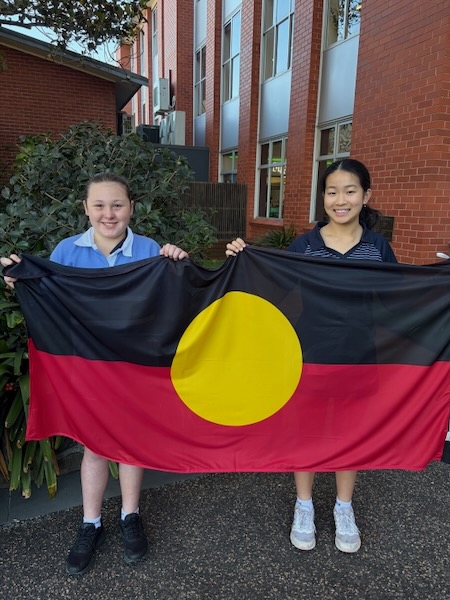
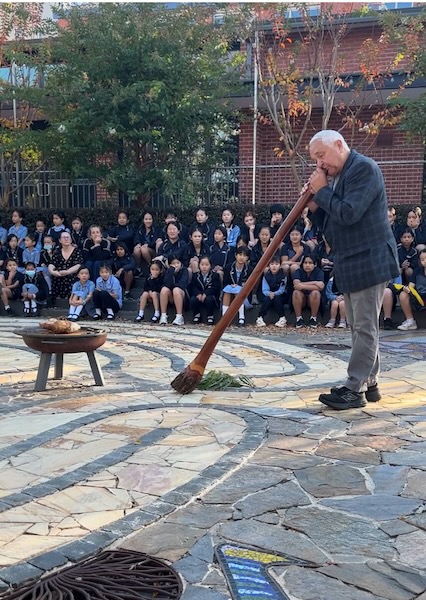
Our students had the privilege of gathering around at Dara’s Labyrinth at the Secondary School for a Smoking Ceremony led by Murrundindi. The ceremony marked the smoking of our new Aboriginal Flag and the Australian Flag, a meaningful act of cleansing, protection and welcome. Members of our Junior School Representative Council shared the responsibility of being flag bearers for the occasion. This was a significant event for Charlotte T from the Noongar Nation who held the Aboriginal flag to show respect for her culture; The flag ceremony was a memorable moment and made me feel like I belonged – Charlotte T (Year 6H)
Smoking a flag is a sign of deep respect and care, acknowledging the significance of what the flag represents and ensuring it is welcomed onto Country in a culturally respectful way. Students witnessed this cultural practice and were able to reflect on our shared responsibility to honour and respect Australia’s First Nations peoples and cultures.
For the remainder of the day, Murrundindi shared his knowledge with students across the Junior School. Year 4 students learned about what life was like for First Nations peoples prior to European settlement, exploring language, food, culture and care for the land. Year 5 students examined how life changed after settlement and the lasting impacts on First Nations communities. Our Early Learning students connected to Wurundjeri culture by engaging in music, movement and storytelling. These rich learning experiences supported students to deepen their understanding, ask thoughtful questions, and continue to build respect for the world’s oldest continuing cultures.
Nancy Robottom
Deputy Head of Junior School